
Nyah Jordan, Staff Writer
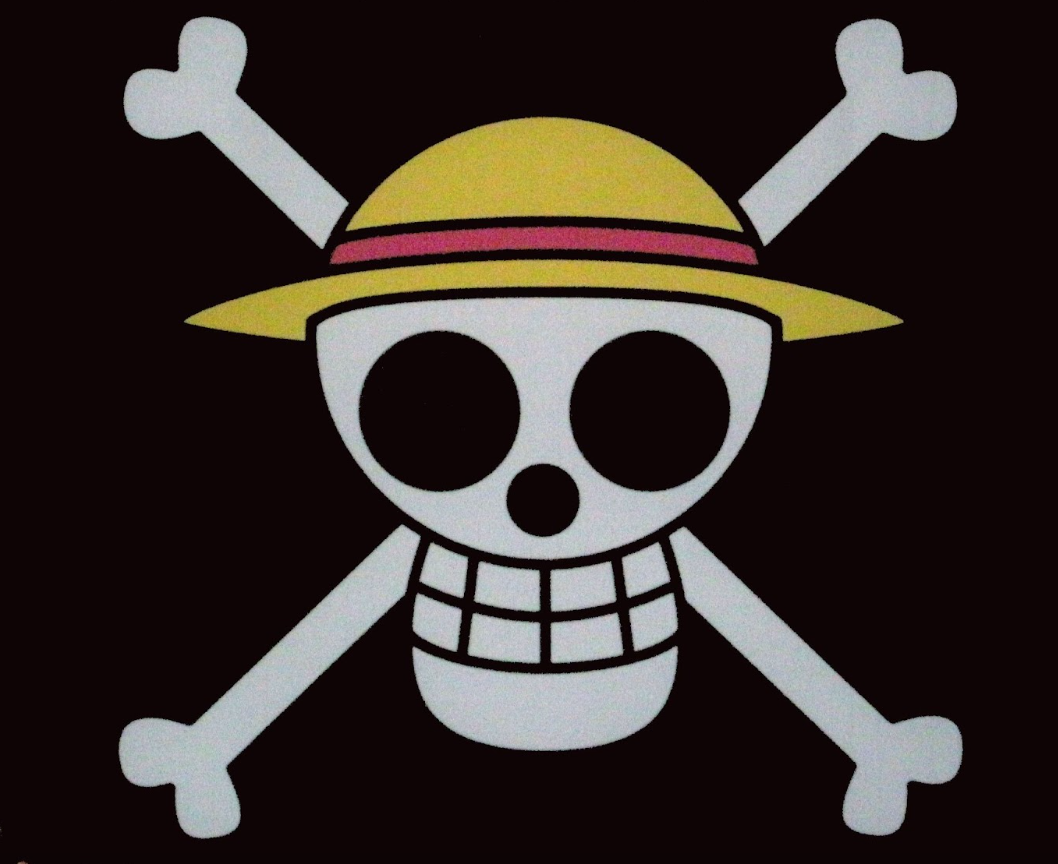
Photo credit: “One Piece flag” by just me julie, CC BY-NC-SA 2.0
A black flag depicting a skull with a goofy grin, wearing a straw hat, flies above a crowd. Hundreds of people line the streets, creating walls around the national government building. They wear dark clothes and masks cover their faces as they protest against governments that are no longer acting for the people but are acting for their own interests.
Across oceans, this flag empowers the ideology of the Straw Hat Crew from the renowned manga and anime, One Piece. According to Samuel Spencer with the BBC, the group of fictional pirates originally debuted in 1997 in Shounen Jump magazine, with Monkey D. Luffy at the forefront of their journeys. The manga had instant success, and the anime adaptation came soon after in 1999. Despite its initial slow uprising in countries outside of Japan, it is now recognized as one of the most famous and best-selling Japanese manga in history, selling over 500 million copies. The major success of this franchise and the straw hat flag that blows through the wind on the crew’s ship has captured audiences of all backgrounds and ages. However, Generation Z is seemingly using their love for the message of One Piece–chasing one’s dream and freeing people from oppressive governments–to inspire their own demonstrations.
The symbol was captured most famously in Nepal during the Generation Z-led anti-government protests, juxtaposed against images of the burning Singha Durbar palace. Other countries, like the United States, Madagascar, and Indonesia, were also uniting alongside the symbol of Luffy and his crew to protest economic inequality and pervasive government corruption. People began to observe successful movements taking off around the world, with a uniting flag flying high above them. Therefore, it is not just the flag that has brought protestors together, despite that being the start of inspiration for Nepalese youth when creating intentional, recognizable symbols to disapprove of their government. People have interacted with the themes and characters from One Piece for almost two decades; thus, the globalization and community-building of the fandom have grown enough to influence and birth global movements. Luffy’s endlessly stretchable limbs and aim to liberate those who are suffering is the backing of new movements and desire to do what is right for the future, as Generation Z are becoming the adults in charge.
Similarly, the jolly-roger flag flying in Nepal is not the first time that protestors have been empowered by their hobbies and interests. In fact, a popular symbol utilized in The Hunger Games film franchise, of raising three fingers in the air, was adopted by protestors in Myanmar and Thailand in 2014. Demands for democracy and anti-coup sentiments rang throughout the streets, accompanied by the easily recognized salute performed by Katniss Everdeen to look down upon the Capitol and its authoritarian President Coriolanus Snow. Protestors were said to use the symbol to enlighten international observers about what was happening within their government, but also the people’s desire for equality and freedom. Through these initial efforts and the use of fandom references in organized protests, it was evident that more individuals were paying attention. Internet usage skyrocketed, in Myanmar specifically, and governments felt threatened; therefore, military-led forces began to limit access to online platforms.
This proves that despite times changing and the Internet growing, various facets of media inspire their audience to stand up. Across ten years, fan culture continually unites people and puts them in a familiar space with one another. Suddenly, shared interests come with shared values, and the symbols and figures that are behind these media spark attention and demand for justice worldwide. Youth protestors, especially, are empowered by the possibility of change in stories told through the lenses of characters like Luffy or Katniss, both of whom are young people standing up to undemocratic regimes. These characters do what is seemingly impossible for individuals in their stage of life, but the battles they fight and their victories motivate audiences to simply try their hand. There is no better way to start a revolution than wearing the symbol of someone who has successfully achieved justice, giving everyday people a chance to no longer live under tyranny. Without the mass following that these stories captured, the symbols for protests could have looked very different from what the public observes today.
A Timeline of Fandom Culture During Generation Z
Infographic by Nyah Jordan
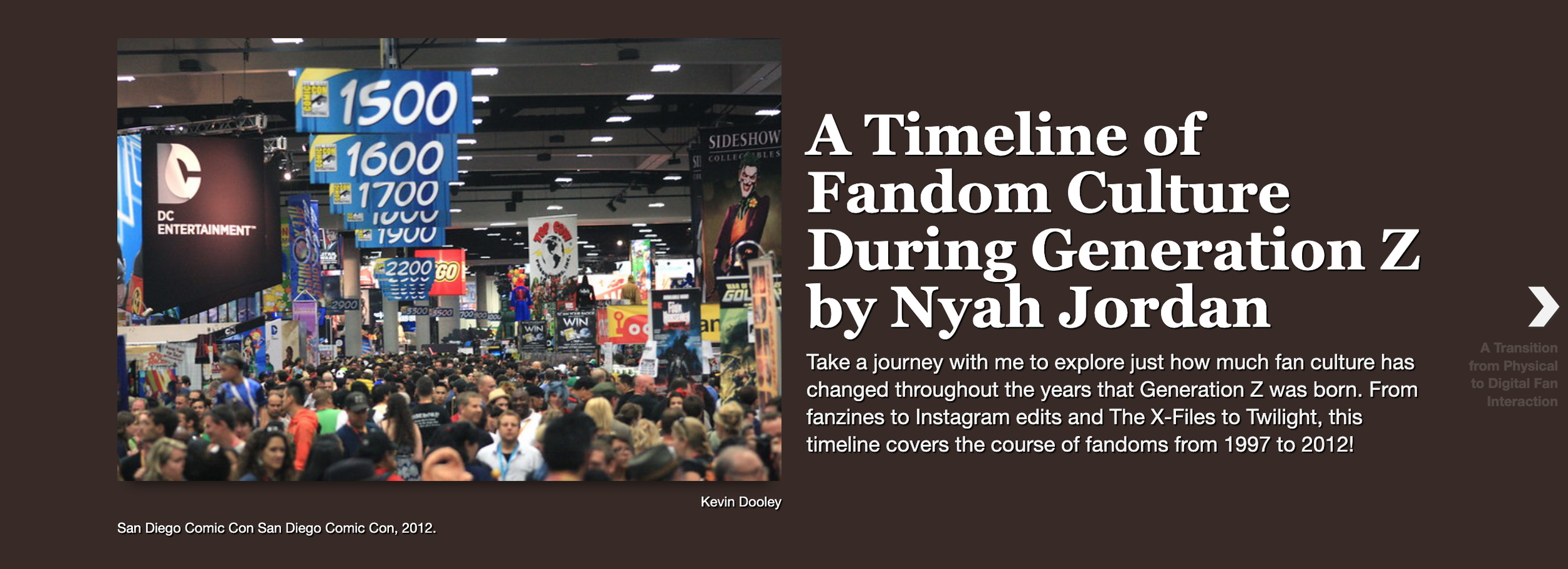
Page 1 of “A Timeline of Fandom Culture During Generation Z”. Infographic by Nyah Jordan.
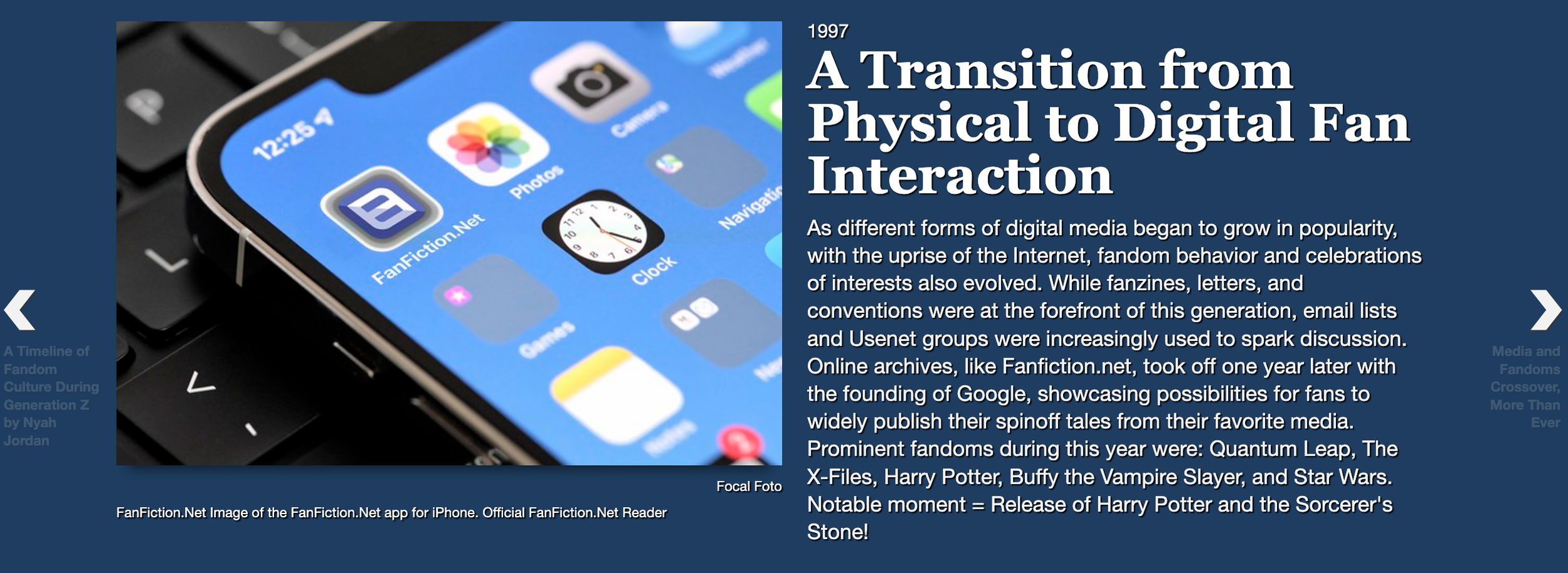
Page 2 of “A Timeline of Fandom Culture During Generation Z”. Infographic by Nyah Jordan.
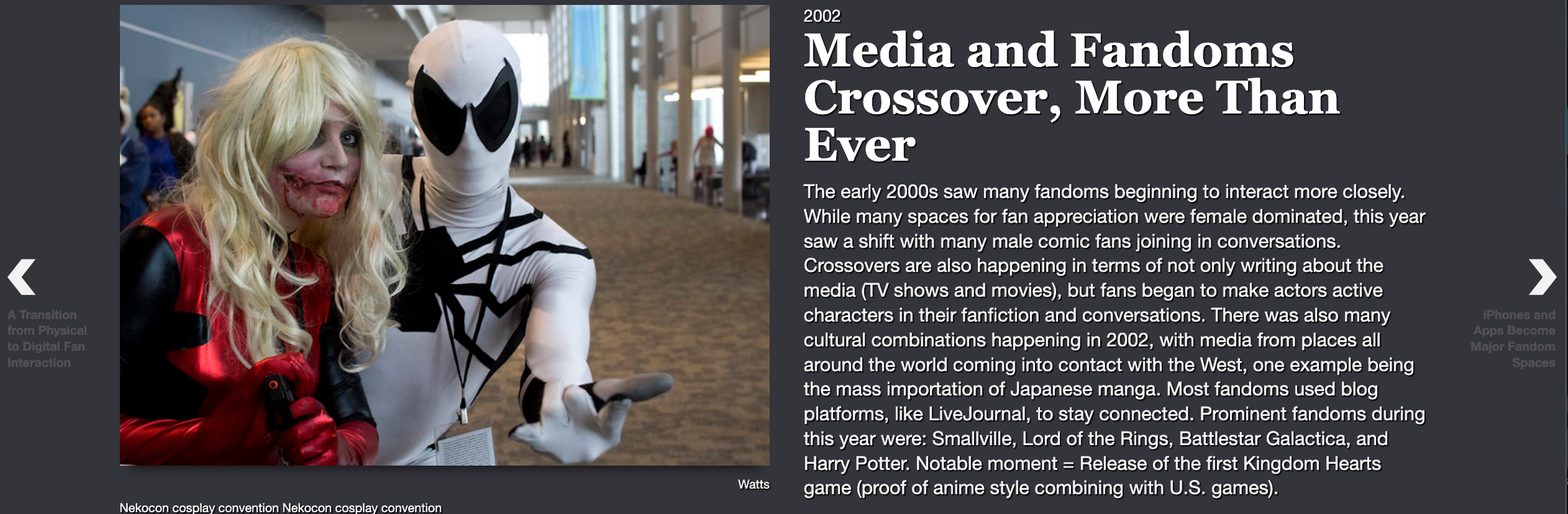
Page 3 of “A Timeline of Fandom Culture During Generation Z”. Infographic by Nyah Jordan.
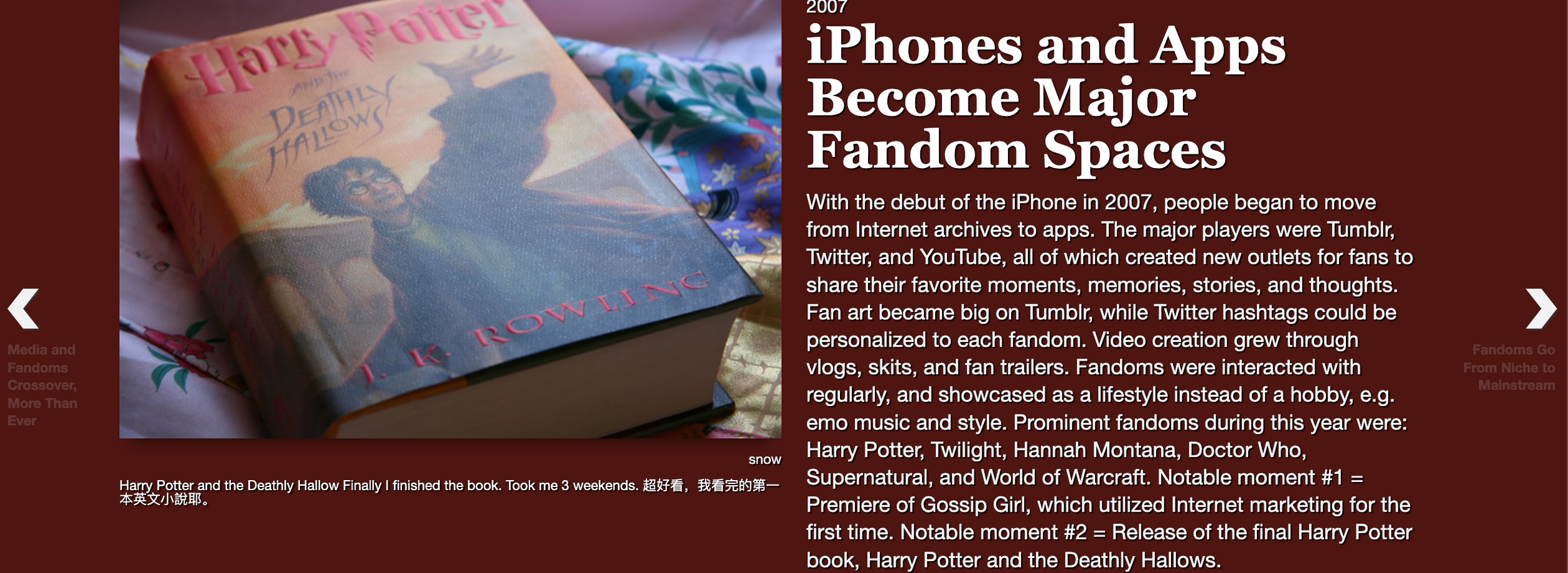
Page 4 of “A Timeline of Fandom Culture During Generation Z”. Infographic by Nyah Jordan.
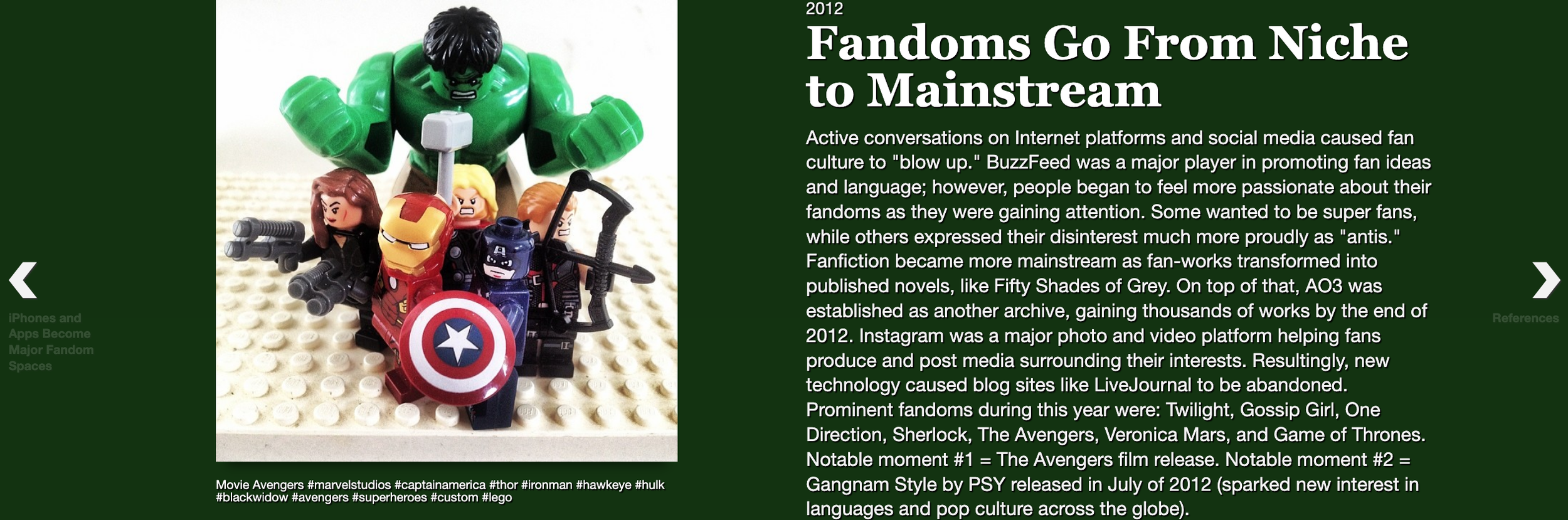
Page 5 of “A Timeline of Fandom Culture During Generation Z”. Infographic by Nyah Jordan.
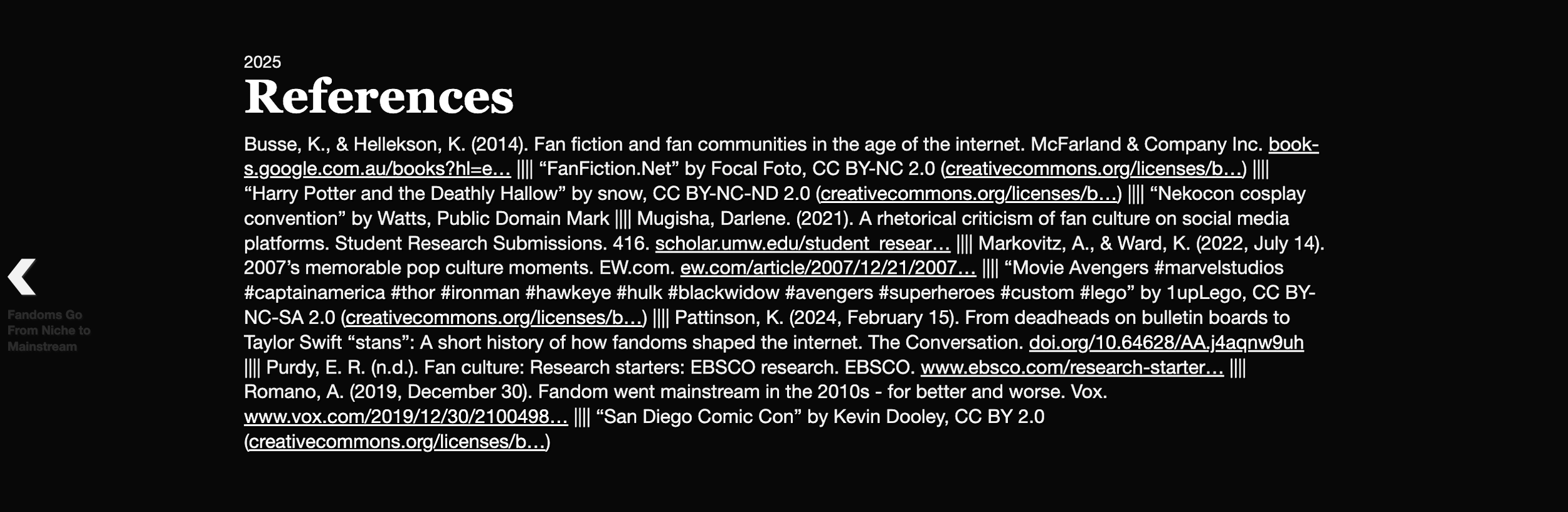
Page 6 of “A Timeline of Fandom Culture During Generation Z”. Infographic by Nyah Jordan.