
Finding Your Way Back: Education as a Bridge to the Next Chapter
Amber Ramsey, Guest Writer
Stay-at-home parents often reach a crossroads where caregiving routines feel steady, but professional goals start tugging again. The question isn’t just whether to return to work, but how to do it with confidence, relevance, and momentum. For many parents, education becomes the bridge between who they’ve been and who they want to be next.
Key Points
● Clarified direction, because coursework forces you to articulate what you want next
● Updated credentials that speak the language employers recognize today
● A manageable reentry path that doesn’t require an immediate full-time leap
● Renewed confidence from measurable progress and external validation
Reframing the Decision to Learn Again
Going back to school isn’t a rewind button; it’s a strategic reset. Skills age, industries shift, and personal priorities evolve during time spent at home. Education offers a way to align your lived experience with current expectations, while giving structure to a transition that might otherwise feel overwhelming.
Learning That Fits Real Life
Education no longer assumes a single life stage or schedule. Online and hybrid programs have reshaped what’s possible for parents balancing school pickups, family meals, and unpredictable days. The structure supports steady progress without requiring constant on-campus presence.
One compelling option is earning an online master's in speech language pathology, which allows parents to build advanced skills while maintaining flexibility. Programs like this focus on practical competencies, not just theory, making learning feel immediately relevant. Students are prepared to expand access to client-centered speech-language services, particularly in underserved communities where demand continues to grow.
Evaluating Readiness
If you’re unsure whether now is the right time, it helps to step through a grounded self-review. Before committing, walk through these considerations with honesty and patience:
● Identify the kind of work you want to return to, not just what’s familiar
● Assess available time blocks during a typical week
● Review financial resources, including aid, savings, or employer pathways
● Talk with family members about how routines might shift
● Research program outcomes rather than just program names
Comparing Common Education Paths
Different educational routes serve different goals. Looking at them side by side can clarify which aligns best with your situation.
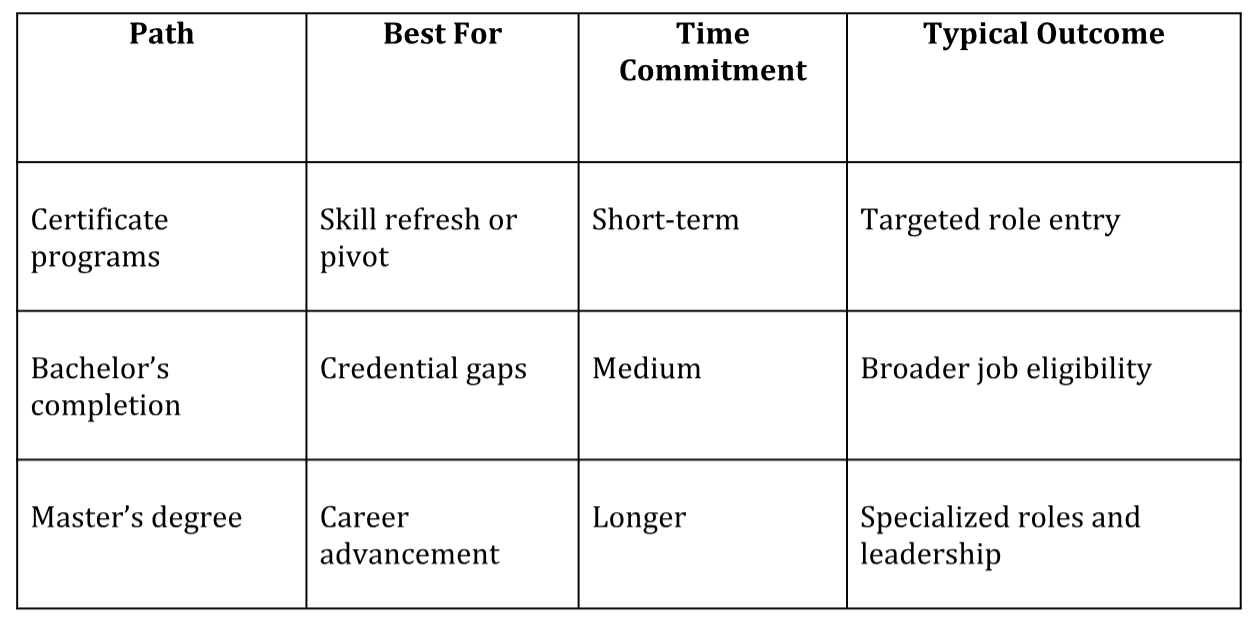
Common Education Paths Comparison. Graph by Amber Ramsey.
Enrollment Questions Parents Ask
As parents move closer to enrolling, the questions shift from abstract to practical.
Will employers value a degree earned while I was at home?
Yes, especially when the program is accredited and skills-based. Employers often see this as evidence of initiative and adaptability. Being transparent about your path can turn gaps into a narrative of growth.
How do I manage guilt about time spent studying?
Guilt is common, but it helps to frame education as an investment in family stability. Clear boundaries and shared schedules reduce friction at home. Over time, progress tends to replace guilt with pride.
Is it realistic to work part-time while studying?
Many parents do, particularly in flexible or remote roles. The key is choosing a course loadthat matches your energy, not just your ambition. Starting lighter can prevent burnout.
What if I’m not sure I want to return to the same field?
Education can be exploratory as well as preparatory. Many programs expose you to adjacent roles you may not have considered. That clarity often emerges during the learning process itself.
How soon after graduating can I reenter the workforce?
Timelines vary by field, but many parents begin networking and applying before graduation. Internships, practicums, or supervised hours often create direct hiring pathways. Momentum builds faster than expected.
Conclusion
Returning to school as a stay-at-home parent isn’t about catching up; it’s about moving forward with intention. Education offers structure, credibility, and a renewed sense of direction during a major life transition. When chosen thoughtfully, it can honor both family commitments and personal ambition. For many parents, it becomes the most grounded step toward a confident return to the workforce.